
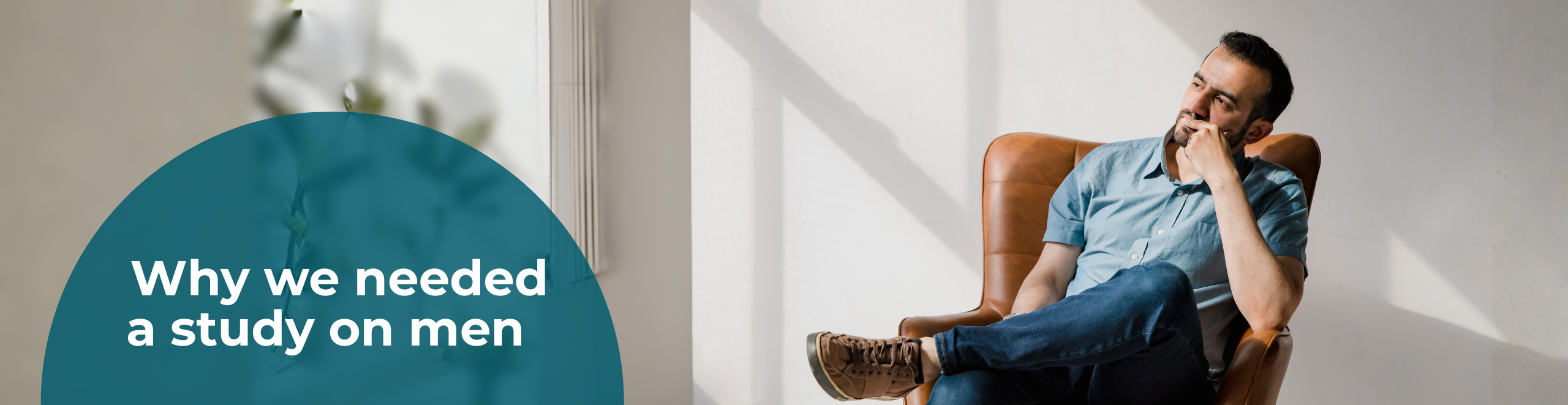

For over 30 years, Vitae Research Institute has been researching the emotional dynamics behind abortion decision-making.
After interviewing women in our past 11 studies, we continued to find that men play a significant role in decisions to choose abortion.
This discovery was unsurprising, especially in light of the cultural background—men are conditioned to be passive. Knowing these dynamics, we wanted to explore how men emotionally perceive unexpected pregnancies and abortion.

To influence the culture, we brought together some of the culture’s strongest and most influential voices to form an advisory committee.
The goal of this committee is to help ensure the study would be focused on the most relevant issues related to men, abortion and culture. Members include men such as Seth Dillon, Archbishop Emeritus Joseph Naumann, Sean Corcoran and Dr. David Reardon.
This committee will help get the study findings into the hands of cultural influencers such as pro-life organization leaders, pregnancy centers, conservative media, policymakers, attorneys, medical professionals, Christian counselors and pastors.
We interviewed three segments of men.
Men who had faced an unexpected pregnancy and told their girlfriend/wife: “I’ll support you, whatever you choose.”
Men who had faced an unexpected pregnancy and took a stronger position: “I want you to have an abortion” or “I want you to have the child.”
Men who had not previously faced an unexpected pregnancy/abortion.

To elicit deep, emotional responses, participants were asked to visualize their lived experiences.
These visualizations offered opportunities for participants to enter into their mind’s eye and relive experiences tied to unexpected pregnancy, abortion, fatherhood, and other relevant issues.
A Few Good Men aimed to answer the following questions:
What inspires/helps men to provide authentic life-affirming support to their wife/girlfriend when faced with an unexpected pregnancy? What is it about his background, upbringing, or experience that inspires him to speak up when facing an unexpected pregnancy?
Why do men say: “I’ll support you either way” when facing an unexpected pregnancy? Why do men not speak up to protect their preborn children during an unexpected pregnancy?
How do men respond to the idea of “providing and protecting for their family”? Does it include preborn children in the womb? Does it include procuring an abortion as a way to protect the woman? Do men feel like they can protect the baby and the mother?
What qualities represent the ideal masculine role model, especially related to being a provider and protector of his family?
What is the man’s perception of his influence on the woman’s decision when facing an unexpected pregnancy/abortion decision?
How do men respond to not having a “say” when it comes to an abortion/life decision? How do they respond to “my body, my choice”?
What is the dialogue like between men and women facing an unexpected pregnancy? How does communication affect the decision about “next steps”?